Extend the Life of Technology.
Not every retired device is waste. A device can potentially be redeployed, refurbished, upgraded, repaired, resold or used for parts. Before routing to recycling, we find out.
Retirement Should Be the Beginning of an Asset's Next Journey.
The Value Hierarchy
Device Grading — How We Assess Refurbishment Potential.
Every device assessed receives a grade based on functionality and physical condition, which determines its refurbishment pathway.
Grade A — Excellent
Fully functional, minimal cosmetic wear
- ●Powers on and operates without issues
- ●All components functional
- ●Minor or no cosmetic defects
- ●Original specifications intact
Grade B — Good
Functional with visible cosmetic wear
- ●Functional but may have cosmetic damage
- ●Minor component issues addressed during refurbishment
- ●Suitable for refurbishment and resale
- ●May require cleaning, battery or minor repair
Grade C — Fair
Partially functional or significant wear
- ●Not fully functional in current state
- ●Significant cosmetic damage or missing parts
- ●May require component replacement
- ●Refurbishment viability assessed case by case
Parts / Recovery
End-of-life — component recovery
- ●Non-functional and not economically refurbishable
- ●Usable components or materials may remain
- ●Assessed for component-level recovery
- ●Balance routed to responsible recycling
Grading is carried out based on functional testing and visual inspection. Outcomes are communicated in the asset report.
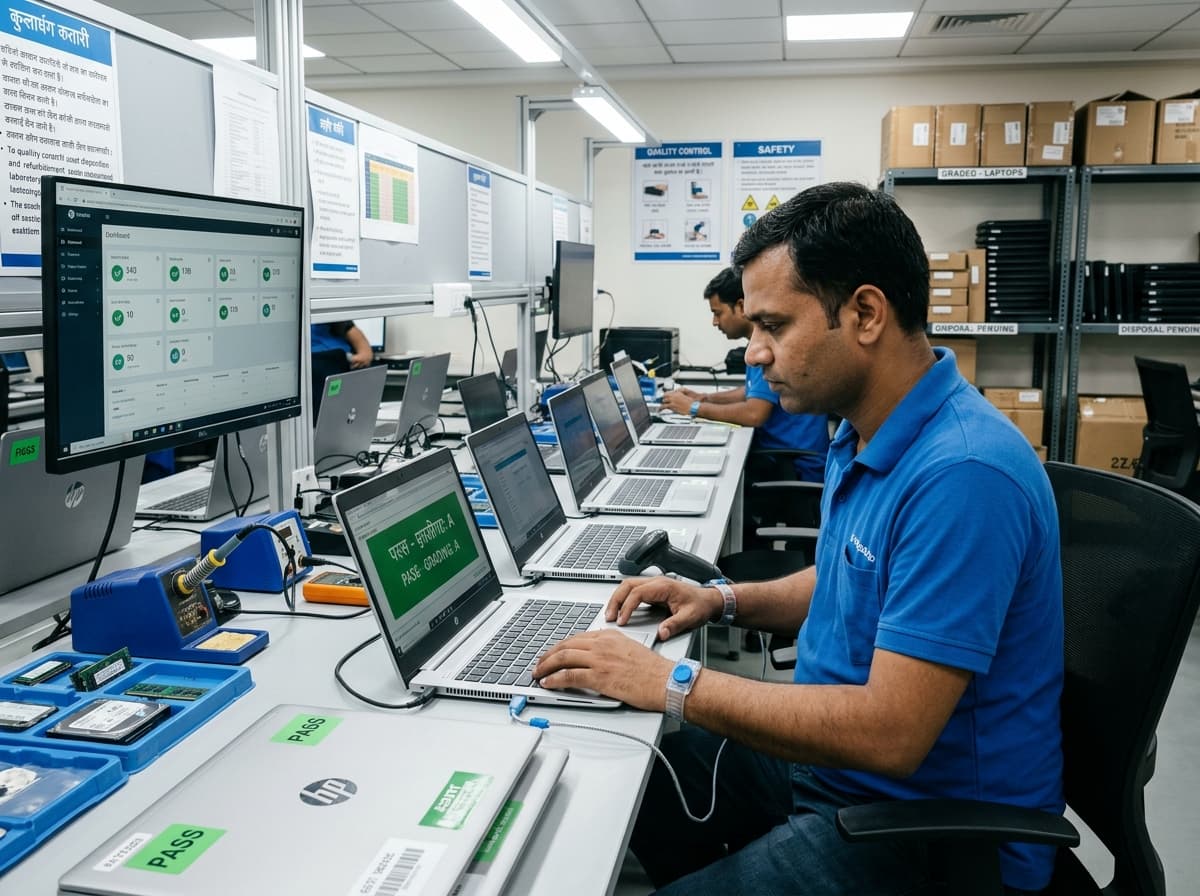
From Collection to Reuse.
A structured seven-step refurbishment process — covering testing, grading, data security, repair and quality checking.
Collection
Devices collected from client premises with chain-of-custody documentation.
Testing
Each device powered on and tested — display, battery, ports, storage, peripherals.
Grading
Devices graded A/B/C/Parts based on functionality and condition assessment.
Data Sanitization
All data-bearing storage sanitized before any refurbishment work begins.
Repair / Upgrade
Grade A and B devices cleaned, repaired, batteries or components replaced where needed.
Quality Check
Post-refurbishment check to confirm the device meets the applicable standard.
Reuse / Resale
Refurbished devices routed to reuse or resale channel. Grade C reviewed further. Parts recovery for uneconomical units.
Find Out What Your Retired Devices Are Worth.
Share your device inventory with us — make, model, approximate quantity and condition — and we'll identify the right pathway for each.